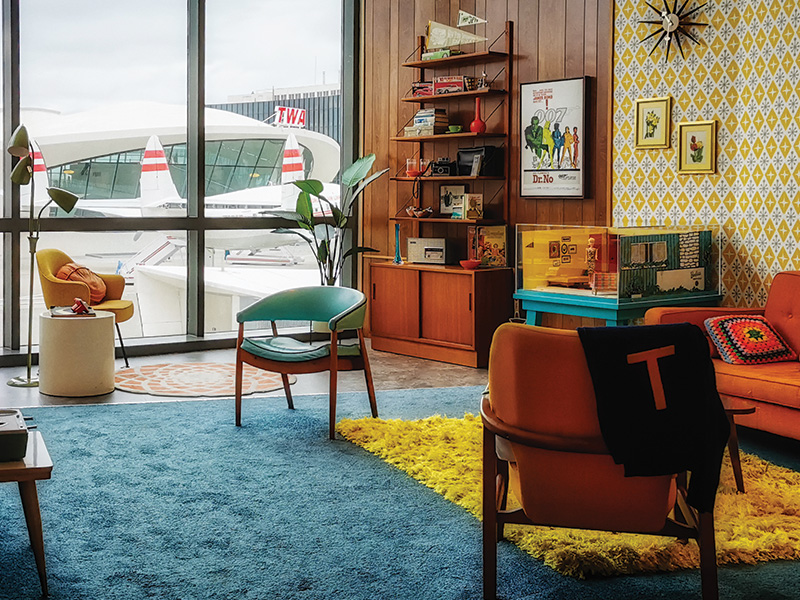
To the delight of vintage lovers everywhere, it sure doesn’t seem like our collective nostalgia for the fashion, décor and design of the 1960s, 1970s and 1980s is on the way out anytime soon. Take the recent restoration of Eero Saarinen’s 1960s modernist TWA terminal (pictured above) at John F. Kennedy International Airport in New York City. Or the extremely 1970s-vibe (bell bottoms, low-slung couch, arched doorway) Harry Styles is giving on the cover of his latest album, Harry’s House. Not to mention Stranger Things, which has brought back not only early 1980s classic Master of Puppets – but also the banana clip.
Our appetite for the design and decor of decades long past seems endless, and for good reason. The shapes, pieces and colors are in many ways iconic and still look good to the eye today. While a room or home entirely decked out in the finery of one era might be a little much, Incorporating retro touches into your home is a quick way to add a little bit of vintage charm.
And why not. Design is all over the place right now! From Coastal Grandmother to minimalism to maximalism to whatever floats your boat. We are here for it!
Keep scrolling for a quick glance at the design hallmarks of each of these touchstone decades – the 1960s, 1970s, and 1980s. We’ll also give you some suggestions about how to mix them into your current look. We’ll show you how to do it without breaking the bank.
1960s: Psychedelics, Flower Power, Pop Art
The 1960s, as we all know, was a time of societal experimentation. America was at war – both at home, and abroad. Science and technology was at an apex. What had been considered “social norms” were being broken apart. And art and design had never been so bold and bright.
If you’re looking to add some energy to your living space, the 1960s is a great era to start with. Here are some ideas of how to do just that!
- Go big on vibrant colors and jarring contrasts including pinks, yellows, oranges and neons; think black/white, red/pink, orange/yellow.
- When in doubt, add a pattern such as paisleys, florals, Pop Art stripes, and shapes.
- Hit up IKEA for light, modern pieces with interesting shapes
- Use space to your advantage by dividing rooms with open shelving and using clear furniture.
- Accessorize with one or two well-placed objects of the era, but don’t go overboard. One Siamese cat sculpture has enough of an impact; no need for a litter.
If you’re hitting up thrift stores, estate sales or auctions for 1960s-era furniture, there are a few identifiers you should be on the lookout for (in addition to the normal wood rot, peeling veneer, etc.).
- Molded materials, like plastic, fiberglass, hardwoods and metal
- Organic shapes, low profile furniture, soft edges
- Anything “space age” – mirrored surfaces, big, puffy sectionals, chairs and light fixtures that look like planets
The real key to finding items like those mentioned above on the cheap is to go where the vintage sellers go: estate sales and auctions in suburbs and rural areas. It involves some time and access to a reliable and sturdy vehicle, which can be tough or even impossible if you live in a city, but that is where you can find some real gems.
If that’s an impossibility, keep scouring the secondhand and thrift stores near you, as well as Facebook Marketplace, Craigslist, and Nextdoor. With enough time and patience, you’ll find some amazing pieces.
1970s: Natural Elements, Texture, Harmony
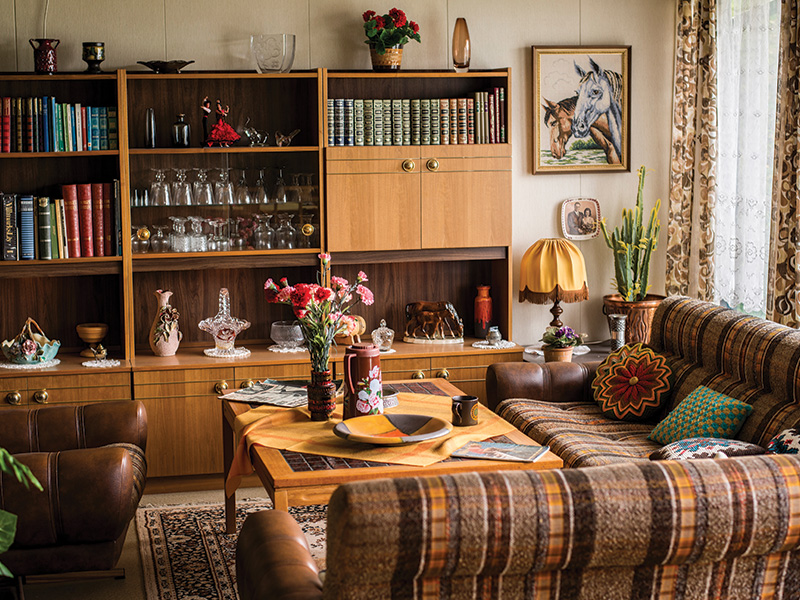
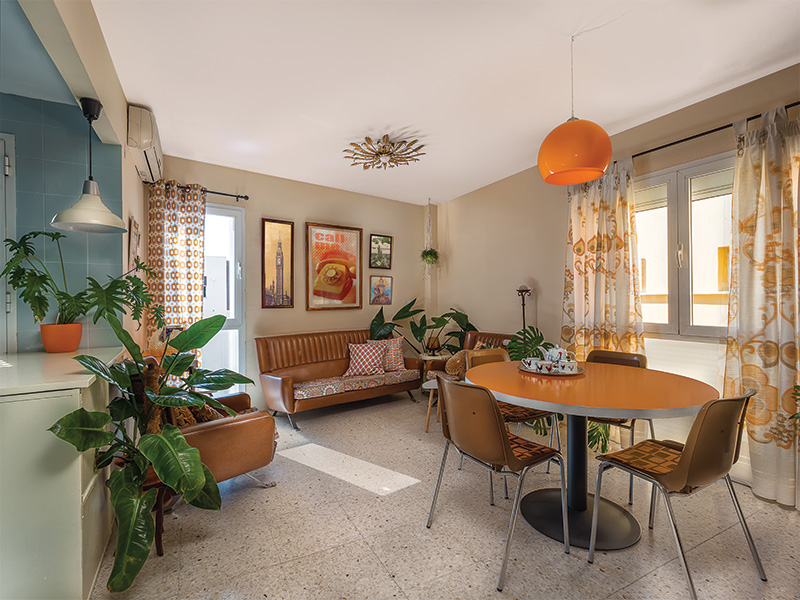
If the 1960s was all about experimentation and pushing mankind to new lengths, the 1970s is about finding harmony within yourself and the space around you. The hallmarks of this design era are relatively timeless – as seen in the picture above of a typical 1970s-era home from the Maihaugen Museum in Norway – and have definitely enjoyed a renaissance over the past few years. You might even have a lot of décor pieces in your home already that hearken back to the 1970s without knowing it. We’re looking at you, army green sauce pan.
Keep scrolling for tips on how to add some 1970s boho / disco / earth mother glam to your living space – or play up the stuff you’ve already got.
- Plants and texture. Hang your plants from macrame plant hangers at different heights to capture two major 1970s trends at one go: plants and textures. Bringing the outside in, baby.
- Incorporate natural materials like rattan. Rattan is key to the laid back, low key charm of the decade. Keep your eyes peeled for pieces made from this natural material.
- Go plush or go home. Pay tribute to Led Zeppelin recording an album in some old drafty castle in England and swath your home in velvets and (faux) furs. You can buy cute printed “animal hide” rugs online to get the look without the pain and suffering.
- Get weird with colors. Mustard yellow. Mauve. Turquoise. Avocado. Earth tones. It’s time to start experimenting with different palettes. You may get some feedback from people who find what you’re doing either extremely welcoming or extremely alarming. Carry on with what’s in your heart. Paint is easy to change.
- Put wallpaper on everything that’s not moving. Modern times has given us the gift of peel and stick wallpaper, which can be removed when your lease is up – or when you simply can’t take looking at the pattern for another second. Whichever comes first. The 1970s loved a good pattern though, so sprinkle them throughout your home to your heart’s content. Bonus points if you can find one with a ‘foil’ component to it.
1980s: Mirrors, Pastels and Geometric Shapes
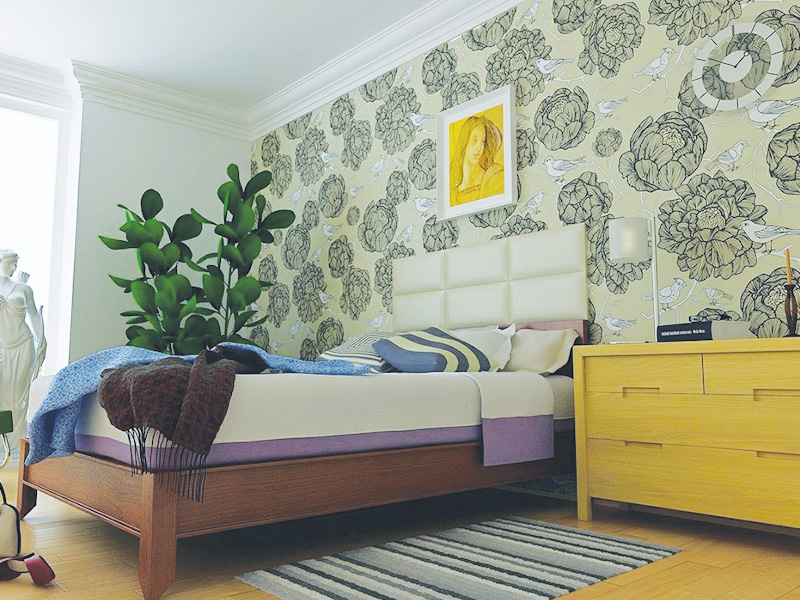
If the 1970s prepared us for one thing, it certainly wasn’t the 1980s. In the design world, as in probably a lot of the rest of the world, the 1980s was an abrupt 180-degree shift. What had been organic and mellow and natural in the 1970s was now all sharp edges, mirrored surfaces and zig-zags.
For those of you looking to get a 1980’s vibe going in your homes, now is definitely the time to be secondhand hunting. The market is getting very hot for items like VCRs, cassette players, squiggly mirrors, Laura Ashley florals, you name it. And it’s not just because of Stranger Things. The music, movies and styles of the 1980’s remain always appealing. So let’s figure out how to get more of it into your living space!
- Get bold with vibrant, beachy tones. The 1980s were all about brightness and optimism. Colors like teal, turquoise, peach, lime and hot pink ruled the day. Incorporate these in small doses throughout your home, or go large by painting whole rooms. Use neutrals as accent furniture instead of lacquered, metal, mirrored or glass as they would’ve in the 1980s and you’ve got yourself a nice, modern compromise.
- Prep it up! Preppy style can be as simple as hot-gluing a grosgrain ribbon onto a lampshade or as complex as outfitting an entire spot with stripes, monograms, florals, various pennants, aged books, leather chairs and framed fern fronds. Take it wherever you want it to go; it’s a classic 80s style that will never look dated.
- Head to the tropics! Tropical prints are a very cost-effective way to add a little 1980s drama to your home. The apartment in The Golden Girls – and Blanche’s amazing oversized Monstera wallpaper – is a big inspiration of this look, but any kind of oversized, tropical floral will do. Wallpaper, throw pillows, kitchen towels, bath towels, you name it – anything that can take a print, can take a tropical print. Feeling artsy? Try stencilling them on the walls!
As you can see, the 1960s, 1970s and 1980s all have plenty of design attributes that are still fire today. And we barely even scratched the surface. Have fun researching these exciting eras, and honing in on what it is exactly about them that gets you so jazzed. Our last tip is to watch shows and movies from the time period you’re researching (Golden Girls) or very authentic time reproductions (Mad Men) to see what grabs you.